






Smart Controls and HVAC Zoning: Understanding When Comfort and Airflow Take Priority
More contractors are being asked about smart controls and zoning. Homeowners want better comfort in every room. They want app control. They want the upstairs bedroom to stop overheating in summer and freezing in winter. If they’ve already paid for a heat pump, they want to know why the house still doesn’t feel right.
This isn’t niche. In the U.S., air conditioning is standard in most homes. The U.S. Energy Information Administration reports that 88% of households used air conditioning in 2020, with central air conditioning or central heat pumps serving as the main cooling equipment in about two-thirds of homes. Homeowners now expect better control over comfort.
The problem is that not every comfort complaint is a zoning job.
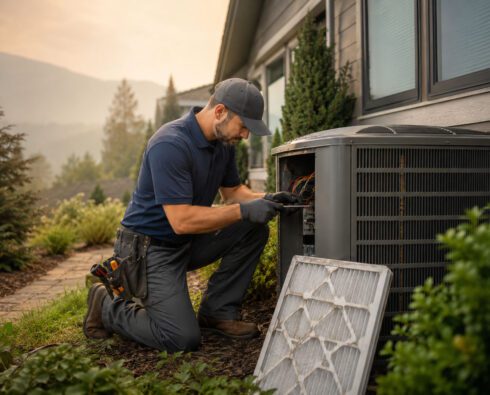
“Sometimes there’s an easy solution,” says Sukhraj Kullar, Operations Manager at ECCO Supply. “Sometimes it’s more complicated.” In existing homes, contractors must examine the ductwork, assess whether zoning can be added properly, and determine whether the cost is worth it.
Why Zoning Is Coming Up More Often
Zoning was once a premium feature. Kullar says that’s changing. More homeowners want it, and better control now feels like an expectation, especially in homes with temperature differences between rooms or floors.
Cost is part of that conversation, too. The U.S. Energy Information Administration’s April 2026 outlook forecasts electric power demand from both the residential and commercial sectors to grow by 3% relative to last summer. When energy costs increase, homeowners pay more attention to how their systems run and what kind of comfort they are really getting.
What Zoning and Smart Controls Actually Do
In a forced-air system, zoning directs airflow where needed rather than treating the whole house as a single space. This may use dampers in the ductwork, a zoning board, and thermostats or sensors in different areas. In suitable homes, zoning addresses common issues like hot upper floors, cold bedrooms, and rooms with varying occupancy.
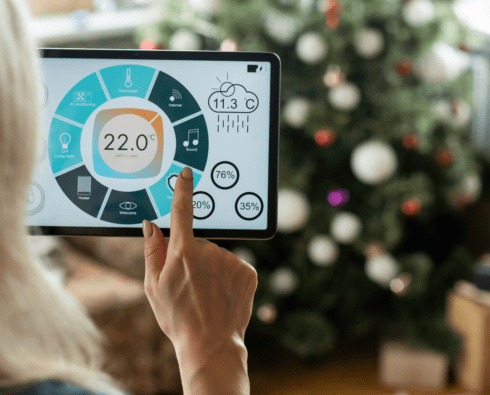
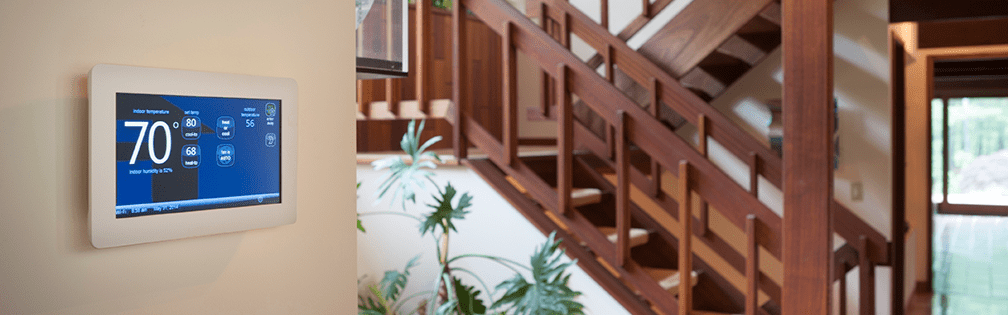
Smart controls add another layer. Kullar highlights app access, room sensors, and systems that respond to outdoor conditions or learned home patterns. Sometimes the system cools earlier because it anticipates a hot day and the home holds heat.
There is also an indoor air quality angle that matters in Canada. Kullar notes that newer sensors can monitor not only temperature but also VOCs and particulate matter, which are important during wildfire season. EPA says fine particulate matter, or PM2.5, is the greatest health concern in wildfire smoke.
Where It Makes Sense and Where It Doesn’t
Zoning makes sense when comfort problems come from how different parts of the house behave. Two-storey homes are common examples, but it’s also relevant in larger homes, in rooms with uneven sun exposure, or in rooms used more than others.
It is generally easier to implement in a new home or a major renovation. You are not trying to work around finished walls or existing duct runs. In an existing home, the question is not just whether zoning could help. The question is whether it can be added properly and whether the homeowner is prepared for the cost and disruption that may come with it.
Kullar says that in finished homes, contractors may need to consider where dampers can be placed, where drywall may need to be opened, and what refinishing will add to the job.
That is where the cost-benefit becomes more complicated for the homeowner.
Where Problems Usually Start: Airflow
This is the part contractors cannot skip.
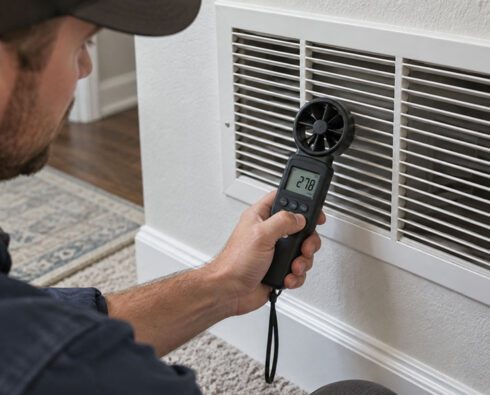
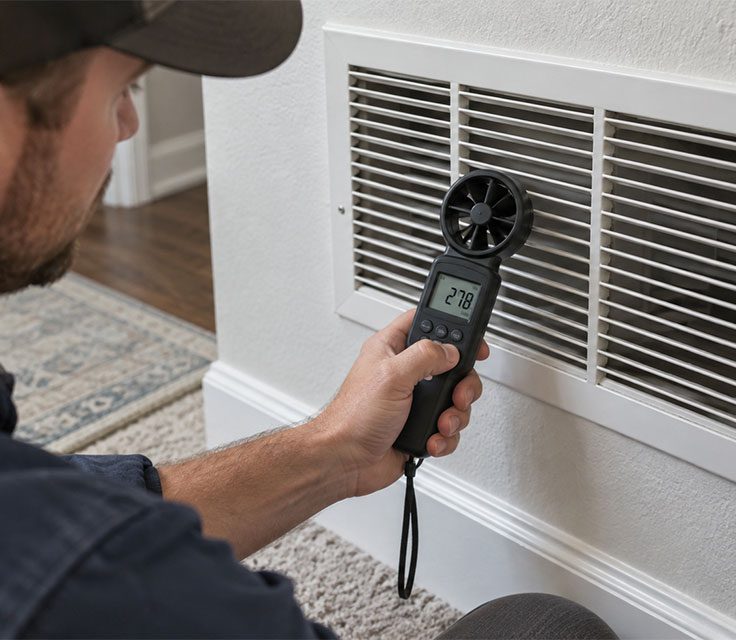
Before recommending zoning, Kullar says contractors must consider duct layout, airflow, static pressure, equipment compatibility, and whether the system can handle the change. Otherwise, zoning can cause more problems.
“If zoning’s not set up correctly, and we’re increasing too much pressure within the ductwork, that can have an increased load on the motor of a system, which can lead to early failures,” he says.
That warning matters even more with inverter-driven equipment. Some systems can ramp down their motors significantly. Some cannot. If a system needs a certain airflow and zoning reduces that path too aggressively, static pressure builds, and the equipment takes the hit. Kullar also stresses that proper equipment selection and sizing remain the first priority. If the system is oversized or undersized, it will not zone effectively.
That is the key point. Zoning only works when airflow and system design are correct from the start; installing zoning without these fundamentals risks more harm than good.
The Existing-Home Conversation
This is where contractors can either build trust or lose it.
A homeowner may have already invested in a heat pump, but still have a problem room. The upstairs bedroom is hot in summer, cold in winter, and they want it fixed. The temptation is to jump to the product.
Kullar suggests a better approach: show real options.
The best option, if possible, is zoning. “The best solution is to add zoning and redirect airflow as needed during the day,” he says.
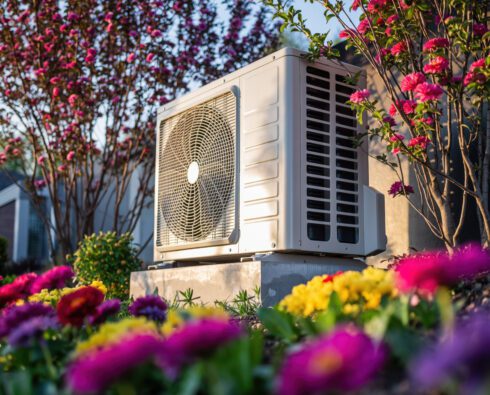
But not every home is suited for retrofitting. If cost or disruption is too high, it may be best to leave the system alone. Another option is adding a ductless unit to the problem room. Kullar notes that some homeowners choose this for a lower cost, even though it’s not the best solution compared to zoning.
That helps contractors clarify the best technical fix and the lower-cost workaround, so homeowners understand the trade-off.
What Smart Controls Add
Smart controls can improve comfort management, though they may not solve every problem on their own.
Kullar points to practical benefits: app-based control, room sensing, small automatic adjustments, and better coordination between comfort and energy use. “You may not notice a half-degree change of temperature in your home, but that can make a large difference on your monthly utility bill,” he says.
He also mentions utility-linked thermostat programs, where utilities can connect to a homeowner’s thermostat to help reduce demand during parts of the day. More broadly, he sees the market moving toward connected homes, where thermostats are expected to integrate with wider home automation systems.
There is also a solid consumer-facing savings point here. ENERGY STAR says certified smart thermostats save about 8% on heating and cooling bills, or about $50 per year.
Comfort First, Then ROI
Kullar’s ROI advice is practical: Start by asking what the homeowner wants. For some, it’s lower energy use. For others, it’s comfort in the upstairs bedroom. For some, better control or connection.
That is a better conversation than promising one upgrade will solve everything.
Browse our smart control products or visit your nearest ECCO Supply branch.