







Allergy Season Is Here: A Practical IAQ Checklist for HVAC Contractors
Spring tends to bring the same homeowner complaints: more dust, more sneezing, stale air, and rooms that never seem to feel quite right.
That makes this a smart time for HVAC contractors to discuss indoor air quality. The point isn’t to push an upsell, but to check key factors, explain problems clearly, and recommend solutions tailored to each home and system. This matters because the EPA says people spend about 90% of their time indoors, where pollutant levels can exceed outdoor levels. AAFA also reports that over 82 million people in the U.S. have seasonal allergic rhinitis.
A good spring IAQ call focuses on filtration, airflow, humidity, ventilation, and whether the homeowner is using the right tool for the problem.
Start with the filter, but do not stop there
Filtration is often the first thing homeowners ask about. They want to know whether a better filter will actually help with spring allergies.
Sometimes it will. Sometimes it will not do enough on its own.
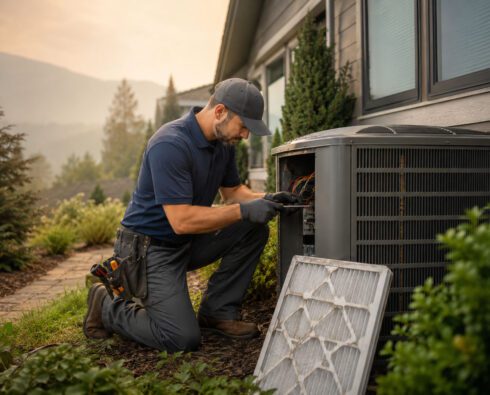
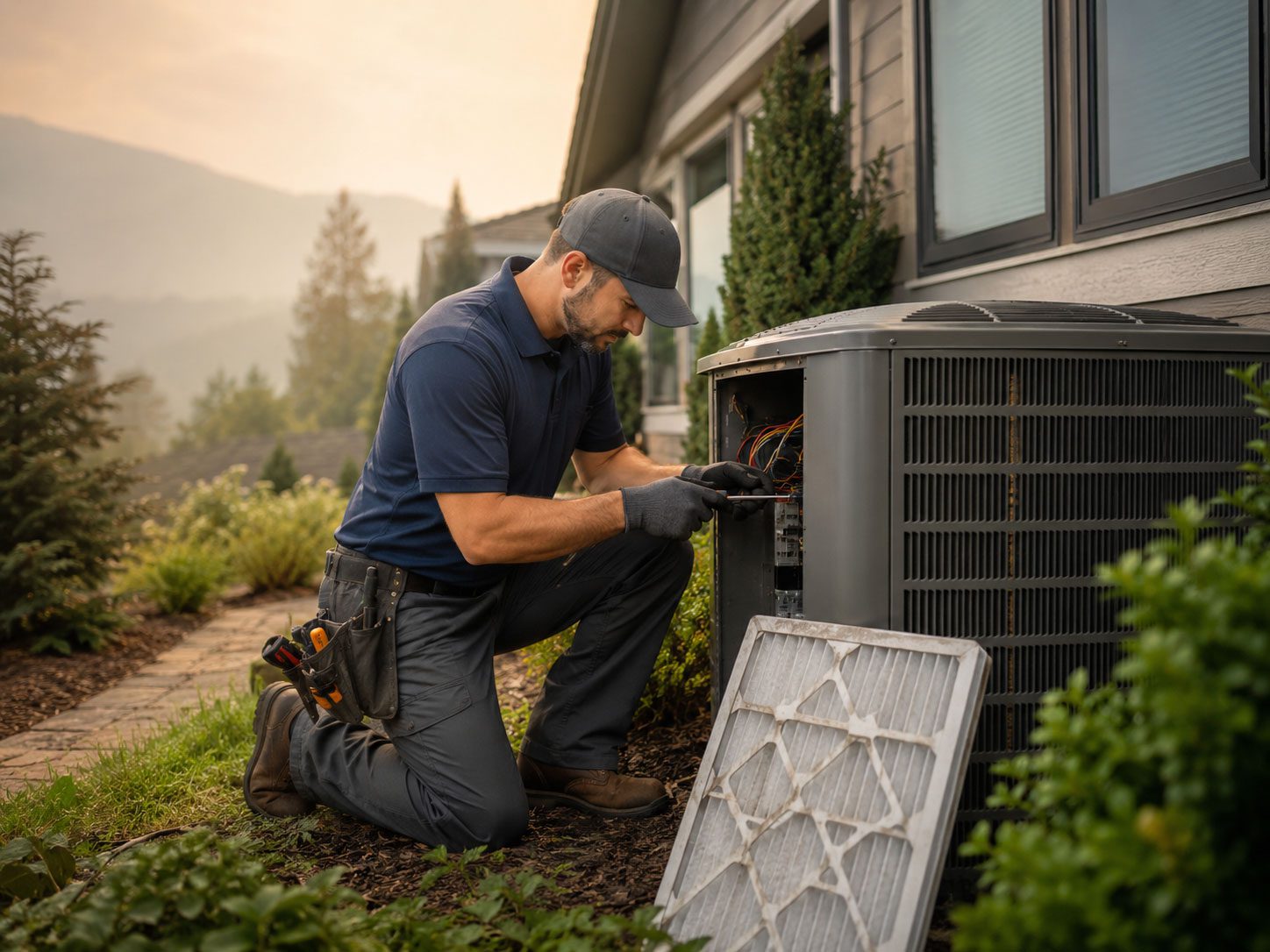
Begin by checking which filter is currently installed, how frequently it’s changed, and if the equipment can support a higher-efficiency option without airflow issues. Energy Star advises checking filters monthly and replacing them at least every three months. Dirty filters can reduce airflow, waste energy, and lead to equipment problems.
Contractors add value by recommending the best filter the system can handle, explaining what filtration can and cannot solve, and avoiding too much resistance.
Check airflow before recommending IAQ add-ons
If a homeowner says they changed the filter, but the house still feels dusty, that is the signal to look deeper.
Before recommending an indoor air quality (IAQ) upgrade, inspect the basics:
- test the performance of the air handler’s blower (the fan that moves air through the system)
- check return air pathways (openings or ducts where air re-enters the HVAC system)
- look for blocked grilles (the vents covering air openings)
- check for obvious duct issues (such as disconnected or damaged ductwork)
- examine the indoor coil (the part inside the air handler that can collect dirt) for buildup
If airflow is weak, even a high-quality IAQ product may not perform as the homeowner expects.
Treat humidity as part of the allergy conversation
Spring IAQ complaints are not always about pollen alone. Humidity can make the problem feel worse.
Too much moisture can contribute to mould (a type of fungus that grows in damp environments) and dust mite issues (dust mites are tiny organisms that thrive in humid conditions). Too little moisture can leave people feeling dry and irritated.
During a spring service call, check whether the home feels damp, stuffy, or unusually dry; whether moisture issues recur in areas like basements or bathrooms; and whether the homeowner is using a single-room device to address a broader issue.
Fresh air still matters
Some spring IAQ complaints are really ventilation complaints. The homeowner may describe the air as stale, heavy, or trapped. In tight homes or homes with closed windows due to pollen, smoke, or noise, ventilation becomes more important.
This is the time to discuss the fresh air strategy. A filter captures particles but does not replace ventilation. Depending on the house, that may mean discussing ventilation equipment (such as fresh air systems), balancing airflow (making sure air moves evenly throughout the home), or identifying when a broader conversation about an HRV (heat recovery ventilator) or ERV (energy recovery ventilator) makes sense.
Be careful with air purifier recommendations
Air cleaners and purifiers can help, but they are often oversimplified. A better contractor conversation starts by defining the main issue: pollen, particles, odours, or both? Is it house-wide or in one room? Is the system compatible with an integrated option, and will the homeowner maintain it?
ASHRAE states that different filtration and air-cleaning technologies address different contaminants and performance levels. Not every air cleaner solves every problem.
A practical spring IAQ checklist for contractors
Here is a simple way to approach allergy-season calls:
- Check the current filter and replacement habits.
Confirm filter type, fit, and condition, and whether it is changed often enough. ENERGY STAR recommends inspecting filters monthly and replacing them every three months. - Confirm the system can handle a filtration upgrade.
Do not recommend a more restrictive filter without considering airflow and system compatibility. - Inspect airflow and distribution.
Look at blower performance, return air, blocked grilles, and any sign that the system is struggling to move air properly. - Look for coil dirt and moisture issues.
Dirty parts and drainage issues affect efficiency and air quality. - Ask about symptom patterns.
Learn if complaints are room-specific, house-wide, or strongly seasonal. - Consider humidity and ventilation.
If the home feels damp, dry, or stale, a filter alone may not help. - Recommend solutions that match the problem. This may mean better maintenance, improved filtration, humidity control, ventilation, or a whole-home IAQ add-on. Not every home needs all options.